

Brought to you by 
If you’re over 50 and feel like your body has changed the rules on you, you’re not imagining it. You’re eating the way you always have, maybe even less, and the scale keeps creeping up. Your waistband is tighter even when your weight hasn’t moved much. And when you go to your doctor, you hear the same tired advice: “Just eat less and exercise more.”
I am a bariatric surgeon and weight loss specialist. But I am also someone who has struggled with my weight for most of my life. My weight has yo-yoed more times than I can count, depending on my job, my stress level, pregnancy, a couple of very effective stints on Weight Watchers, and now GLP-1 medications. I can tell you that a diet only works as long as you can stick to it, and every year, the same effort seems to buy a little less.
Weight gain with age is not a character flaw. It is biology, and several changes stack on top of each other:
Muscle loss. Starting in our 30s, we lose muscle every decade unless we actively work to keep it, and the loss speeds up after 60. Muscle is the body’s calorie-burning engine, so less muscle means fewer calories burned, all day long, even at rest.
Menopause. As estrogen levels decline, many women gain weight and fat redistributes from the hips and thighs to the belly. This “visceral” fat is the most dangerous kind, raising the risk of diabetes, heart disease and fatty liver disease. Hot flashes and night sweats disrupt sleep, and poor sleep drives up hunger hormones and cravings. And men are not off the hook either: testosterone declines gradually with age, which also favors fat over muscle.
Joints, medications and life. Arthritis, back pain and old injuries make vigorous exercise difficult or impossible. Common medications for blood pressure, mood, sleep and diabetes can cause weight gain. And caring for aging parents, grandchildren or a demanding career leaves little time for yourself.
Put all of that together and it’s no wonder that the strategies that worked at 30 stop working at 55. Exercise is still important, but it rarely produces substantial weight loss on its own, and if your knees hurt every time you walk, how are you supposed to exercise your way out of this? The good news is, we now have more effective tools than ever, and they work at any age.
Medications
GLP-1 medications like semaglutide and tirzepatide are the safest and most effective weight loss medications we have ever had. They are the closest thing we’ve had to a “magic pill” (or injection), and for many people in midlife and beyond, they quiet the constant “food noise” and improve blood sugar, blood pressure and cholesterol along the way.
But older adults need to use them wisely. Rapid weight loss of any kind can take muscle with it, and as we age, muscle is precious. That is why medication should always be paired with adequate protein, strength training and monitoring of body composition.
Procedures and surgery
Bariatric surgery has repeatedly been proven to be the most effective and durable treatment for obesity, with an excellent safety record, and age alone is not a reason to rule it out. In fact, the majority of my patients are over 50. These procedures are done with minimally invasive techniques like laparoscopy and the da Vinci robot, and they often don’t even require an overnight hospital stay. For older adults, the payoff can be dramatic: remission of type 2 diabetes, lower blood pressure, less joint pain, and fewer daily medications. Yet surgeries like sleeve gastrectomy and gastric bypass are still used by fewer than 1% of eligible patients.
Surgery isn’t for everyone, and today there are more options than ever. The Allurion balloon, a swallowable gastric balloon that received FDA approval in 2026, requires no endoscopy and no anesthesia. The endoscopic sleeve gastroplasty is an incisionless procedure that makes the stomach smaller, done entirely through the mouth. And the magnetic duodeno-ileostomy (MagDI) is a newer surgery that uses magnets to create an intestinal bypass, with an easy recovery and excellent weight loss.
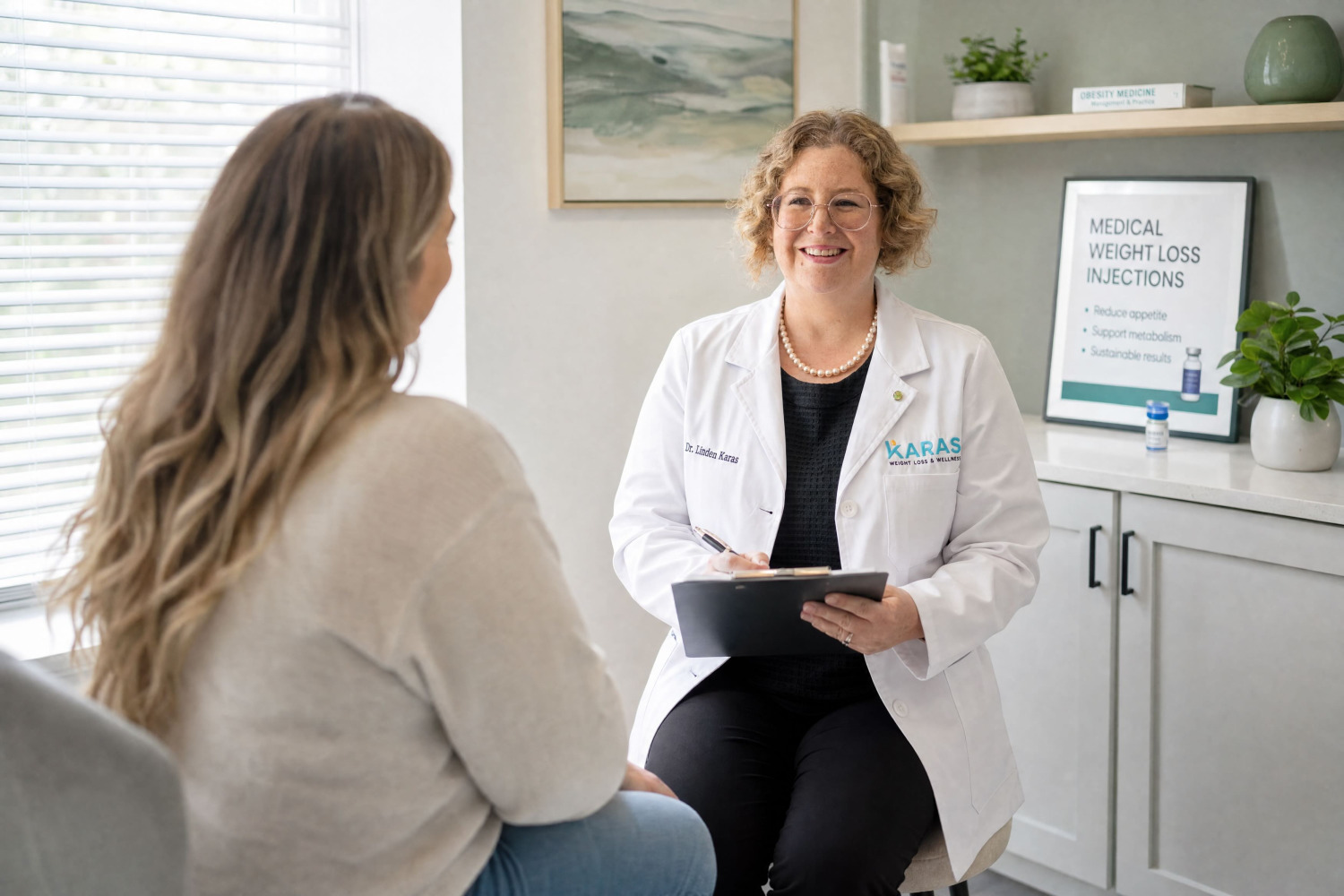
At Karas Weight Loss & Wellness, we offer every one of these options. That means we can recommend what is truly right for you, not just the one tool we happen to have. We start with a conversation, not a prescription. Every patient gets a plan built around their health, their goals, and their life. Our team includes a bariatric surgeon, a nutrition educator, a health coach, physical therapists, and a network of mental health providers and personal trainers, because lasting weight loss takes more than one tool. And because I’ve lived this struggle myself, you’ll never hear “just eat less and move more” in our office.
It’s never too late to take control of your weight and health. The benefits of weight loss go far beyond what you see in the mirror. Losing even 5–10% of your body weight can lower blood sugar and blood pressure, ease the load on aching knees and hips, and improve sleep and energy. More than anything, it helps protect what matters most as we age: staying active, independent, and able to do the things we love with the people we love.
We see patients at our offices in Westlake and Lyndhurst, with telehealth visits available. If you’ve lost faith in your ability to control your weight, I’d love to help you find it again. Call 216-377-7257 or visit our website karasweightloss.com/ to schedule a consultation.
Please join us at our upcoming open houses. No RSVP needed. Thursday, 10/15, 5-7 pm in the Premier Physicians building, 25200 Center Ridge Rd., Suite 1100, Westlake.